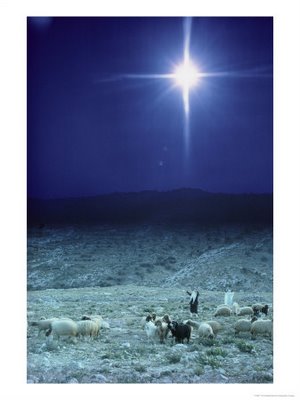
 This means we can have peace on earth. Today.*
The Prophet Micah gives us a vision of a peaceful and prosperous society. Swords have been beaten into plowshares and West Point has been closed down. Not only is there no War Power, there is no "police power." The Messiah -- the "Prince of Peace" -- rules the earth. He does not rule through clergymen, He rules through His Word. He sits enthroned at the right hand of the Father.
|
The vision of everyone dwelling peacefully under his own vine and fig tree is the original "American Dream." The “Vine & Fig Tree” verses were the most popular Bible verses in America three centuries ago. But do they work in the 21st century? Not only will they work, but it's never been more important to let these verses be our blueprint.
Jesus can rule the nations because the Word of God is the Sword of the Lord, and is more powerful than the military sword of man:
Matthew 26:52
Then said Jesus unto him, Put up again thy sword into his place: for all they that take the sword shall perish with the sword.
Micah 4:3
and they shall beat their swords into plowshares,
and their spears into pruninghooks:
nation shall not lift up a sword against nation,
neither shall they learn war any more.
Hebrews 4:12
12 For the word of God is living and powerful, and sharper than any two-edged sword, piercing even to the division of soul and spirit, and of joints and marrow, and is a discerner of the thoughts and intents of the heart.
2 Corinthians 10:3-5
3 For though we walk in the flesh, we do not war according to the flesh. 4 For the weapons of our warfare are not carnal but mighty in God for pulling down strongholds, 5 casting down arguments and every high thing that exalts itself against the knowledge of God, bringing every thought into captivity to the obedience of Christ,
Ephesians 6:17
17 And take the helmet of salvation, and the sword of the Spirit, which is the word of God;
Isaiah 11:4
4 But with righteousness He shall judge the poor,
And decide with equity for the meek of the earth;
He shall strike the earth with the rod of His mouth,
And with the breath of His lips He shall slay the wicked.
Isaiah 49:2
2 And He has made My mouth like a sharp sword;
In the shadow of His hand He has hidden Me,
And made Me a polished shaft;
In His quiver He has hidden Me.”
Hosea 6:5
5 Therefore I have hewn them by the prophets,
I have slain them by the words of My mouth;
And your judgments are like light that goes forth.
2 Thessalonians 2:8
8 And then the lawless one will be revealed, whom the Lord will consume with the breath of His mouth and destroy with the brightness of His coming.
Revelation 1:16
16 He had in His right hand seven stars, out of His mouth went a sharp two-edged sword, and His countenance was like the sun shining in its strength.
Revelation 2:16
16 Repent, or else I will come to you quickly and will fight against them with the sword of My mouth.
Revelation 19:15
15 Now out of His mouth goes a sharp sword, that with it He should strike the nations. And He Himself will rule them with a rod of iron. He Himself treads the winepress of the fierceness and wrath of Almighty God.
Revelation 19:21
21 And the rest were killed with the sword which proceeded from the mouth of Him who sat on the horse. And all the birds were filled with their flesh.
A global Christocracy is possible because God uses His Sword-Word to change hearts and bring world peace through global obedience.
So then faith cometh by hearing, and hearing by the word of God. (Romans 10:14-17)
This is why we are commanded to read, study, and meditate on God's Word daily. My case for the “Vine & Fig Tree” worldview will only be persuasive if you read the verses of Scripture and let them change your mind. Theocracy happens when we proclaim and obey God's Sword-Word (Matthew 5:19).
I believe the Bible is the Word of God.
Jesus is the Word of God incarnate; the Bible is the Word of God inscriptured.
Some people call this "Bibliolatry." I worship the Bible. That alarms nearly every church I know.
The Bible claims to be the Word of God. It claims that God speaks to human beings. It claims that God used human beings the way I am using a keyboard as I write this.
Let's consider first the claim that God speaks, and the Bible is God speaking to us.
Imagine that a UFO lands on the White House lawn, and an extraterrestrial being hands the President a Peace Treaty. The ET says, "Read this Treaty. It tells you how to cure cancer, end war, obtain free energy, eliminate the threat of global warming, and extend lifespans by hundreds of years. If you agree to abide by its terms, our race will help your race. If you do not agree, you will be destroyed. We will wait right here for your answer."
Network television will have their cameras at the White House 24/7. Commentators will be speculating endlessly about what the extraterrestrial Treaty says, and whether or not the President will accept their terms. People will cancel vacations and having children, breathlessly waiting for the decision, knowing their entire future hangs in the balance.
If there are any ET's in the universe, they were created by the God of the Bible. His Word is more important than the word of any ET. But we spend more time watching CNN or FoxNews than we spend listening to the Bible, even though the news channels aren't covering anything as interesting as a UFO on the White House lawn. For some, "news" doesn't get our attention as much as sports, soaps, or celebrities.
All the while, we have a book from the Creator of the universe sitting un-read on a shelf next to the Flat Screen TV.
What the heck is wrong with us?
The Bible is a Peace Treaty -- a Covenant -- that God is willing to enter into with those who have been in rebellion against Him. The Treaty calls for unconditional surrender on our part. The Treaty promises blessing -- "salvation" -- on God's part.
The ethical and moral significance of a covenant of unconditional surrender is sometimes masked by theologians who focus on "covenant theology" as a theological buzzword.
Theme 0. The Bible is the Word of God:
Theme 1. God is Sovereign:
Theme 2. The Reign of Christ Began in the Past:
Theme 3. The Mountain is Eden:
Theme 4. Global Conversion
Theme 5. God's Law
Theme 6: Education
Theme 7: Spontaneous Obedience
Theme 8: The Messiah Reigns:
Theme 9: Peace
Theme 10: No Fear of Violent Sword-Bearers
Theme 11: The Family
Theme 12: Service
Theme 13: The Garden
Theme 14: The Fall of Man
Theme 15: Salvation
Theme 16: Jerusalem versus Athens
Theme 17: Community
Theme 18: Charity
Theme 19: The Gospel of the Kingdom
Theme 20: Justification
Theme 21: The Church
Theme 22: Eternity
| Micah's Prophecy |
| Focus text: "He shall judge"
He will teach us of His ways, |
The "He" in this passage is Jesus the Messiah.
"Theonomy" = "Theocracy"
He will teach us of His ways,
and we will walk in His paths:
3 And He shall judge among many people,
and rebuke strong nations afar off;
The Law-Giver is our Judge and King (Isaiah 33:22). If you don't believe in Theonomy, then you don't believe Jesus is a Christ-King. He's just a homeless story-teller. He has nothing to say to "strong nations" -- Pharaoh, Caesar, Hitler, Stalin, Trump, or Biden. Jesus cannot command them to repent if there is no Theonomy.
Micah is prophesying a global Theocracy.
This is an important question. Also, Why Does Jesus Have To Rebuke Nations?
Under the premillennial scheme, are there false kings and false kingdoms in the Millennium, after Christ's Second Coming and enthronement in Jerusalem? If there are, how does the premillennial vision of the "millennium" differ from "the church age" in which we now live?
The postmillennialist and preterist contend that Jesus is the Messiah today, right now, and is rebuking nations. But how does He do that if He is not seated on a throne in Jerusalem? The premillennialist needs to explain how Jesus is able to rebuke and govern the people of Brazil and Canada when He is sitting in Jerusalem, but cannot rebuke nations if He is sitting at the right hand of God in heaven.
The word "Theocracy" comes from two Greek words meaning "God Governs."
God "governs" us when He issues commandments and holds His subjects personally responsible to obey them. Those who believe the Bible obey His commandments and are blessed. Those who reject His reign violate His commandments and experience God's rebuke and curse. See Deuteronomy 28 and Leviticus 26. Blessing and cursing are both examples of God governing.
Daniel 2 is a prophecy of global Christocracy. In the days of the Roman Empire, Daniel predicted, Christ would be born. He would crush the ancient Demonic Imperial Paradigm and begin spreading His own Kingdom over the earth. Historians have documented the on-going fulfillment of this prophecy, which continues today (though not without local and temporary ups-and-downs, and not without failure to distinguish the "civilization" of Athens and that of Jerusalem):
The entire world of human action can be governed by Jesus the Christ without Pharaohs, Caesars, Führers, SWAT Teams and Political Technocrats. This government is called "Providence."
But just as Jesus is our Christ -- our anointed King and High Priest -- so believers -- all believers -- are priests and kings. We are the Body of Christ, and Christ executes His reign through us. True Christians are Theocrats in our families, businesses, communities, and every area of human action. Not archist Theocrats, as we saw above; Christlike Theocrats. Just as Adam was placed into the Garden to build it up into the New Jerusalem, so we are called to administer a global Christocracy.
In the centuries after the fall of Rome, merchants set commercial standards and resolved disputes without politicians. This was the world of the Lex Mercatoria. Lex Mercatoria is a legal phrase which has come to signify the power of a stateless society to prevent most disputes and in a peaceful, harmonious and orderly way resolve those disputes that arise -- without dependence upon tax-funded political institutions such as monarch, crown, parliament or congress.
The prophet Micah speaks of the universal reign of God's Law over the earth.
Here again is John Adams, inviting us to think about a world where human law-makers are put out of business, and God's Theonomy replaces man's law-books and creates God's Theocracy. R. J. Rushdoony wrote the following:
This is what John Adams, later second President of the U.S., wrote in his diary on February 22, 1756:
Like others of his day, Adams was a theonomist! |
In principle, Adams is advocating "Theocracy." Adams is saying we should be governed by God and His Law Book, the Bible. "God governs" is the literal meaning of "Theocracy." Rushdoony says "Theocracy" is anarcho-capitalism.
America was originally a Theocracy. That is, America originally acknowledged that God was in charge and we had a moral obligation to obey Him.
James Madison, "the Father of the Constitution," is reported to have said,
We have staked the whole future of American civilization, not upon the power of government, far from it. We have staked the future of all of our political institutions upon the capacity of each and all of us to govern ourselves ... according to the Ten Commandments of God.
America was originally a Christocracy.
Benjamin Rush signed the Declaration of Independence and served in the Presidential administrations of John Adams, Thomas Jefferson, and James Madison -- each of whom came from a different political party. And of what party was Rush?
I have been alternately called an aristocrat and a democrat. I am now neither. I am a Christocrat. I believe all power . . . will always fail of producing order and happiness in the hands of man. He alone Who created and redeemed man is qualified to govern him. [An Eulogium Upon Benjamin Rush, M.D. - Google Books ]
Only our Creator and Redeemer should be our Ruler (Romans 1:25).
America was originally a Trinitarian Christocracy.
On March 6, 1799, President John Adams proclaimed a national day of prayer in which Americans would
Everyone lives in a theocracy. Either the God of the Bible governs us, or some other god, or everyone gets to be his own god. Usually, the State is seen as the apotheosis of Autonomous Man, and "God walking on the earth," as Hegel put it.
Postmillennialism/Preterism claims that Jesus became the Christ/King in the past, and now IS the Christ.
But to say "Jesus is the Christ" is to say that Jesus alone is the Christ/King.
The "kings of the gentiles" (Mark 10:42-45) bitterly resent this claim. They say that John Adams, in principle, is advocating "Theocracy" or "anarchy."
No, Adams wasn't advocating "anarchy" directly. Adams' purpose was just to praise the Bible.
But nobody in government today would ever say what Adams said: We should take the Bible for our only law book.
That's too "radical." It's extremist. It's "homophobic." Or something. Only a "domestic terrorist" would say something like this.
Taking Jesus as our Messiah and the Bible as our only lawbook puts "the kings of the gentiles" out of business. We should listen to John Adams, and pray "that through the grace of His Holy Spirit we may be disposed and enabled to yield a more suitable obedience to His righteous requisitions" in every area of our lives.
The Holy Spirit holds Theocracy together.
The Holy Spirit holds Theocracy together through the preaching and teaching of the Word:
| The Westminster Confession has a chapter on God and the Trinity, on Christ as Mediator, but no chapter on the Holy Spirit. |
Christ is the ruler in a Christocracy. But Christ rules through His Body. "The Body of Christ" is sometimes called "the Church," but that makes some people think we're talking about church buildings and the College of Cardinals. But the Body of Christ is every believer.
Connection to other core doctrines:10. Archistlessness
Your local church probably does not believe that. The phrase sounds unobjectionable, but only because nobody thinks very deeply about it.
Jews have thought about it. They deny that the virgin-born Jew from Nazareth is Israel's Christ (a Greek word which is equivalent to the Hebrew word "Messiah"). Jesus is not their King.
But surprisingly, most people who call themselves "Christians" don't really believe these four words. They don't believe Jesus is -- in our day, right now -- fulfilling all the "Messianic Prophecies" of the Bible, prophecies which are relegated to a time often called "The Millennium."
The two most controversial words in that statement are the words "IS" and "THE."
Most church-going Christians believe that Jesus will become the Messiah at a future Christmas, a future advent, a future "Second Coming." But the word "IS" -- present tense -- is the wrong word to use about Jesus being the Messiah. To say that Jesus "is" the Messiah is to say that He already became the Messiah and began ruling in the past. Theologians use the word "preterism" to describe an event that happened in the past. Nearly all churches believe "preterism" is a heresy. |
The word "Christ" has many meanings. The basic meaning is "anointed," as in "king" (Matthew 21:5 ), e.g., "King of Israel" (John 1:49). Jesus is also called a "Ruler" (Micah 5:2), a "Potentate" (1 Timothy 6:15 ), a "Governor" (Matthew 2:6 ), a "Captain" (Hebrews 2:10 ), a "Prince" (Isaiah 9:6 ), and many other words (some of which we aren't familiar with in our day, like "Horn" [Luke 1:69 ]) which are political in nature. Many political terms can be inferred: |
|||
Our point is that Jesus is the -- THE -- the ONLY -- legitimate "king," "prince," "ruler," "president," "prime minister," "governor," "legislator," "judge," and "potentate." If we simply practice what we preach -- by obeying His commandments -- we will have a peaceful, orderly, and prosperous society. All other earthly kings, princes, rulers, presidents, prime ministers, governors, legislators, judges, and potentates are illegitimate usurpers and anti-Christ. The desire for a creature to be our king "like all the nations" (or "gentiles") (1 Samuel 8:5,20) is the rejection of the Creator as King (1 Samuel 8:7; Isaiah 33:22; Romans 1:25). Jesus said His followers are not to be like these gentiles and their false rulers (Mark 10:42-45). The word "ruler" is the Greek word from which we derive the English word "anarchist." We are not to have any "archist" but Christ. I know what you're thinking. "What are you, some kind of ANARCHIST?" That suspicion is the kind of thing we were all taught in schools run by earthly kings, princes, rulers, presidents, prime ministers, governors, legislators, judges, and potentates. We are never taught what Jesus taught. Jesus said the kings of the gentiles love to impose their will on other people by political and military force, but Christ's followers are not to do these things (Mark 10:42-45). Mark uses the Greek word from which we get our English word "anarchist." He says the kings of the Gentiles love to be "archists." But Christians are NOT to be "archists." So some folks will say all this talk about Jesus being THE Ruler -- the only legitimate Ruler -- will lead to "anarchy." Obeying Jesus as the Christ will certainly lead to the elimination of bloodthirsty empires and their Caesars, Pharaohs, and Führers. But it will certainly not lead to chaos and lawlessness (which is what most people have been trained to think of when they hear the word "anarchism" or contemplate the absence of "archists" in the swordless Kingdom of Christ). Taken together, the two words "IS" and "THE" are branded as the heresy of "anarcho-preterism." Most people who call themselves "Christians" today believe that Micah's prophecy will not begin to see fulfillment until Jesus returns to earth a second time. But the Bible teaches that Jesus was born during "the last days" of the Old Covenant, and He put into effect a New Covenant, and as a result of this New Covenant, billions of human beings have been streaming to "the mountain of the Lord," and the world is more obedient to God's Commandments today than it was before Jesus was born. The world is more peaceful. The mainstream media and secular academia of the "Boomers" do not want you to understand this. Nor do most clergymen. The more perceptive clergy will say that our belief that Jesus has already begun reigning as the Christ/Messiah of Israel, that Micah's prophecy is already being fulfilled, and that we should continue beating swords into plowshares, is "dangerous." They will warn you that we are promoting the ancient heresy of "anarcho-preterism." They are correct (we are indeed promoting "anarcho-preterism") except for two things:
|
Jesus is the Christ.
In 2026, almost nobody believes that statement to be true.When you first hear it, you might think that the juxtaposition of "Jesus" and "Christ" is obvious and not at all controversial. But when you dig deeper, it appears that this is the most controversial proposition on planet earth.
And -- most surprisingly -- the vast, overwhelming majority of professing, church-going (or non-churching) Christians do not believe that Jesus is the Christ today.
This website defends the proposition that Jesus is the Messiah right now, and has fulfilled or is fulfilling all the "messianic prophecies" -- even those prophecies most Christians reserve for "the millennium."
Jesus is the Christ. Today.
This means we can have peace on earth. Today.*
The angels told the shepherds on the first Christmas that the birth of a Jewish boy in Bethlehem meant "Peace on Earth."
And this is the sign unto you: Ye shall find a Babe wrapped in swaddling clothes, and lying in a manger.
And suddenly there was with the angel a multitude of the heavenly host praising God, and saying,
Glory to God in the highest,
And peace on earth
among men in whom He is well pleased.
A favorite Christmas carol mentions this announcement:
| It came upon the midnight clear, That glorious song of old, From angels bending near the earth To touch their harps of gold: "Peace on the earth, good will to men, From heaven's all-gracious King." The world in solemn stillness lay To hear the angels sing. |
Another Christmas carol notes that Christian churches pay lip-service to this announcement::
| I heard the bells on Christmas Day Their old, familiar carols play, and wild and sweet The words repeat Of peace on earth, good-will to men! |
But the poem, written during the Civil War, expresses some doubt:
| Then from each black, accursed mouth The cannon thundered in the South, And with the sound The carols drowned Of peace on earth, good-will to men! |
The poet today might write about "The War on Terrorism."
| And in despair I bowed my head; "There is no peace on earth," I said; "For hate is strong, And mocks the song Of peace on earth, good-will to men! |
But the poet had something many of today's Christians lack: Optimism:
| Then pealed the bells more loud and deep: "God is not dead, nor doth He sleep; The Wrong shall fail, The Right prevail, With peace on earth, good-will to men." |
Probably a majority of self-described Christians today believe the future belongs not to "The Prince of Peace," but to "the antichrist," "great tribulation," "Armageddon," and global war and suffering.
Sure, things will be much better after The Second Coming of Christ. Then we will have "peace on earth." But not before.
Apparently, the angels were mistaken. They thought the first advent of Christ meant "peace on earth."
Apparently the only meaning of Christmas is
"You can go to heaven when you die, and leave all the war and suffering on earth."
This website challenges the prevailing pessimism.
Many people complain that the Bible is filled with war, slavery, and violence. "How can that be the Word of God?" they ask.
But the world before Christ really was filled with war, slavery, and violence. Many historians note that most human beings died violent deaths, or died prematurely from the violence of slavery, conquest, captivity, and all forms of human violence.
If they could travel through time from their day to ours, every prophet who spoke of the coming Messiah would fall on his knees in gratitude to God for the fact that most people on earth today die peacefully, not violently. They would be utterly speechless walking down the aisles of your local WalMart. The character of human life was changed dramatically by the babe born in Bethlehem. And further change is possible:
| For lo!, the days are hastening on, By prophet bards foretold, When with the ever-circling years Comes round the age of gold When peace shall over all the earth Its ancient splendors fling, And the whole world give back the song Which now the angels sing. |
Christ has already eliminated 99% of all the violence that existed in the world before the first Christmas.
With the poet who "heard the bells on Christmas day" we should note that with the birth of Jesus,
This website claims that Christians could end 99% of the remaining violence in the world in 2026.
But we have to believe in the real meaning of Christmas:
These verses contain 23 themes.
It's like a "Systematic Theology."
But it's also like the Unabomber's Manifesto, at least in the eyes of the government. According to ancient Jewish traditions, especially the Talmud and some apocryphal writings, Micah may have been killed by King Joram or other leaders because of his prophecies against political corruption and idolatry. The kings brought war and chaos. Governments didn't like the prophets. And yet the prophets brought "good news" to those who loved the LORD. The best news imaginable.
Micah's Big Picture: A Messiah is coming, this King will be born in Bethlehem (Micah 5:2), and His Law is a path to world peace.
Let's look at the words of the text by way of introduction, then unpack some of the details. There's a lot here to uncover. We need to go through the passage twice just to get acquainted with it.
Our starting point:
This theme is called "Theme 0" because it's "Ground Zero." Or it's "Patient 0," sending Micah's "vector" all over the world. All the other themes spread from this initial vector. God communicates with human beings through the Bible.
|
Micah 1:1 Micah 4:4 Micah 4:6 |
Micah says
| 1 it shall come to pass, |
Question.: How does Micah know what will come to pass?
Answer.: God told him. (See Theme 0.) This is seen in verse 4:
| 4 for the mouth of the LORD of hosts hath spoken it. |
Question.: How does God know what will come to pass?
Answer.: God is Sovereign. God is in control.
Next, Micah says,
| the mountain of the house of the LORD shall be established |
Question.: When will this establishment of the reign of the Messiah come to pass?
Answer.:
| in the last days |
What is meant by the phrase "the last days?" Turn on the TV and the prophecy preachers will tell you we are now living in "the last days."
They are mistaken.
Perhaps Micah meant "in the distant future." But the writers of the New Testament consistently affirmed that they were living in "the last days," and the best interpretation of this phrase is that they were living in the last days of the Old Covenant. Either way ("last days of the Old Covenant," or "distant future") the New Testament writers said they were living in "the last days." They were also living in the first days of the New Covenant. We are not living in the last days of the Old Covenant.
Again, Micah says,
| the mountain of the house of the LORD shall be established |
Let's look at three components of that phrase:
First of these three:
| that the mountain |
The original "mountain" was the Garden of Eden, from which flowed four rivers (downhill). The temple on Mt. Zion was a model of the Garden of Eden. The Bible treats the Garden of Eden as literal history.
I'm working on a massive website on this subject, and its relation to another of these themes.
| the house of the LORD |
The "house" of the LORD is the temple. The temple of the LORD: Where is it today? It was destroyed in A.D. 70 by the Romans. This definitively ended the Old Covenant. The New Testament writers say that the new temple is made up of God's People. This is Theme 21, down below.
| shall be established |
This "establishment" has already happened. The new temple (God's People) was being built even before the old temple had been destroyed. The virgin-born Jesus of Nazareth was seated in His new temple as the Messiah of Israel (Acts 2:36). The word Messiah = King. This Kingdom was established in the past, and we are not waiting for a second coming of the King in our future. This was Theme 2, above.
Next, Micah says the Messiah's Kingdom has rightful jurisdiction over all other kingdoms. It will be established
| in the top of the mountains, and it shall be exalted above the hills; |
The nations around Israel built their own "high places" in an attempt to imitate God's Mountain-Garden. The neo-conservative woke regime in Washington D.C., as well as the UK, UN, EU, NWO, WEF, the "former" USSR, etc. are all rival "mountains." Christ has a superior jurisdiction over them all. This is
| and people shall flow unto it. 2 And many nations shall come, and say, |
This began happening in Acts 2, and has continued since, with ups and downs through history. "The People" and "the nations" are more likely to flow to Christ's Kingdom when they can see it being practiced.
God's Law is better than man's law. The people of all nations will agree (Deuteronomy 4:6).
| Come, and let us go up to the mountain of the LORD, and to the house of the God of Jacob; and He will teach us of His ways, and we will walk in His paths: for the Law shall go forth of Zion, and the Word of the LORD from Jerusalem. |
Too many Christians today think there is a conflict between "Law" and "Gospel." Micah didn't think so. God's Law is "good news' because it is a light on our path (Psalm 119:105; Proverbs 4:18; Isaiah 42:16).
Notice the words of exhortation and education: "Let us go!" That's our job today: teach and encourage (Matthew 5:19; Mathew 28:18-20). Persuasion, not coercion.
Notice the words of confidence and freedom: "We will walk in His paths."
| 3 And He shall judge among many people, and rebuke strong nations afar off; |
Who is "He?" It is clearly Jesus the Messiah. The first nation He judged/rebuked was the nation of Israel, who murdered their King. This took place in "the last days" of the Old Covenant. Perhaps Jesus is about to judge the U.S.A., a once-Christian nation.
| and they shall beat their swords into plowshares, and their spears into pruninghooks: nation shall not lift up a sword against nation, neither shall they learn war any more. |
Peace is a major theme in the Bible. Yes, there are many historical accounts of wars in the Bible, but what is the point of this history? What are we to learn from ancient Israel's faithless wars and gross idolatry?
Jesus is "The Prince of Peace." Many (if not most) Christians today claim that wars must increase until the "Second Coming" of Christ, sometime in our future. This is based on an erroneous interpretation of Matthew 24:6. There are fewer wars today than there were in Micah's day. Christians have enough financial and electoral power to end all the wars currently taking place in the world today. That sounds like a crazy claim until you prayerfully think it through.
I understand why it seems nuts to think this prophecy could be fulfilled in our day. During my lifetime, the federal government in Washington D.C. has murdered, maimed, or made homeless tens of millions of innocent, non-combatant civilians around the world. The Bible says "Thou shalt not kill," and "Thou shalt not steal." But theft and violence are the lifeblood of the government, which is why it will not allow teachers in your local public school to teach students "God says don't hurt people and don't take their stuff."
Q.: What would happen if Christians never voted for any politician who promised "Peace through Strength," that is, "peace" through killing millions of innocent people?
Q.: What would happen if Christians never voted for any politician who promised to use the power of the sword (the State) to engage in extortion ("taxation") to fund mass murder by the military?
Q.: What would happen if "the Law shall go forth" out of the New Temple of God's People, and they never voted for any politician who promised to violate God's commands against murder and theft?A.: All of today's politicians would have to resign from "the public sector" and get jobs in "the private sector."
The "Public Sector" ("the sword") would be abolished.
"Public Schools" exist to brainwash you into believing that beating swords into plowshares would be a terrible thing.
| and they shall beat their swords into plowshares, and their spears into pruninghooks: 4 But they shall sit every man under his vine and under his fig tree; and none shall make them afraid: |
he is actually advocating a swordless or stateless society.
Q.: Who bears "the sword?"
A.: The ones who make other people afraid.
The great Jewish sociologist Franz Oppenheimer called them "Political Man."
Q.: Who uses the "plow?'
A.: People who raise our standard of living.
Franz Oppenheimer called them "Economic Man."
| “Private Sector” | “Public Sector” |
| Non-“Government” Sector | “Government” Sector |
| Competitive Sector | Monopoly Sector |
| Persuasive Sector | Coercive Sector |
| Peaceful Sector | Violent Sector |
| Productive Sector | Parasite Sector |
| Servant Sector | Archist Sector |
| "Economic Man" | "Political Man" |
We currently spend a trillion dollars a year on "swords." Three thousand dollars a year for every man, woman, and small child in America. Every year. It diminishes -- it does not raise -- your standard of living.
| 4 But they shall sit every man under his vine and under his fig tree; and none shall make them afraid: |
This was the most popular Bible verse in America 300 years ago. This was the original "American Dream."
The Family is God's plan for human beings. Peace, personal property, and prosperity through service is God's vision for ordinary people like you.
| 4 But they shall sit every man under his vine and under his fig tree; and none shall make them afraid: |
What does a vine and fig tree mean? They raise our neighbor's standard of living when we cultivate them and sell them. Our goal is service. Our neighbors find us useful because we work in a way that benefits others. This goes back to the first commandment Scripture records God giving man: Exercise dominion over the earth (Genesis 1:26-28).
Dominion = work = service
The land is cared for when it is owned. The word "property" means it's personal. Owning land makes one responsible. By taking care of land we secure the blessings of liberty to ourselves and our posterity.
| 4 But they shall sit every man under his vine and under his fig tree; and none shall make them afraid: |
Why are there some people who make others afraid? The answer goes back again to the Garden of Eden, where Satan tempted Adam and Eve: "Ye shall be as gods." Descendants of the first Adam like to have power over other people. But if they are born again as descendants of the Last Adam (1 Corinthians 15:45), they have a new nature, and want to serve other people.
The Hebrew word usually translated "salvation" or "save" includes the ideas of victory, security, prosperity, peace, health, welfare.
Throughout the Bible, the words "salvation," "save," and "savior" all point to deliverance: being delivered from those sword-bearers who make us afraid. If we will get on God's Path (Theme 5), God will deliver us from our enemies.
| 2 for the Law shall go forth of Zion, and the Word of the LORD from Jerusalem. 5 Although all people will walk |
There is a contrast between the people of "Jerusalem" and those outside. The early church father Tertullian (c. 155 AD – c. 220 AD) spoke of the outsiders as "Athens."
What indeed has Athens to do with Jerusalem? What concord is there between the Academy and the Church?... Our instructions come from “the porch of Solomon”.... Away with all attempts to produce a mottled Christianity of Stoic, Platonic, and dialectic composition! We want no curious disputation after possessing Christ Jesus...!
Tertullian, Prescription against Heretics (VII).
Perhaps in his day Christians were being told to "Listen to the Academy!" just as Christians in our day are told "Listen to the Science!" But Micah says the temple of the living God will not be corrupted by the temple of man the would-be god.
Augustine wrote about the conflict between "The City of God" and the city of man. Where is your "citizenship?" You are called to walk on Jerusalem path which leads to the “Vine & Fig Tree” world, not the Athens path which leads to meaninglessness, chaos, and war.
| 2 for the Law shall go forth of Zion, and the Word of the LORD from Jerusalem. 5 Although all people will walk |
We don't have to do this alone. Christ promises us a community of mutual support.
Next, Micah says,
| 6 In that day, saith the LORD, will I assemble her that halteth, and I will gather her that is driven out, and her that I have afflicted; 7 And I will make her that halted a remnant, and her that was cast far off a strong nation: |
God rebukes unbelieving nations, but then restores them and gives them faithful obedience.
God's People -- the Body of Christ -- are part of that process, by extending mercy to those God has rebuked (Matthew 25:31-46). The Christian home is a shelter.
| and the LORD shall reign over them in mount Zion from henceforth, even for ever. |
The word "gospel" means "good news."
What is the "good news" of the Bible?
First and foremost, it is a "gospel of the Kingdom" as the Bible repeatedly states, but seems to be ignored in our day.
The great dispute during the Protestant Reformation was over "Justification." Are we "justified by works" or are we "justified by faith." Both options are incomplete. When we consider that the Gospel is a "gospel of the Kingdom," then we see that we are justified by our allegiance to this kingdom and its King. This gives Biblically appropriate weight to our works and defines our faith.
In the Bible, the "church" is a community of believers, not select hierarchy of clergymen.
| we will walk in the name of the LORD our God for ever and ever. and the LORD shall reign over them in mount Zion |
The Kingdom that Christ inaugurated in "the last days" of the Old Covenant lasts forever.
Of the increase of His government and peace
There will be no end
Isaiah 9:6-7
Checklist of the 23 Themes in this text:
Theme 0. Bibliolatry: God speaks, we worship the Word
Theme 1. Calvinism/Predestination: "It shall come to pass"
Theme 2. Preterism: "in the last days"
Theme 3. Creationism: The "mountain" = Eden
Theme 4. Optimillennialism: "Peoples will stream; nations will come"
Theme 5. Theonomy: "the Law of God"
Theme 6. Education: Theonomic/Jerusalem/Family/business
Theme 7. Character: although all people Athens,
we will Jerusalem
Theme 8. Theocracy: He shall judge
Theme 9. Pacifism: "swords into plowshares"
Theme 10. Anarchism; Anarcho-Capitalism: no violence = no state || Jesus is the One True Archist
Theme 11: Patriarchy: "His Vine"
Theme 12: Dominion/work/service
Theme 13: Agrarianism: Vine & Fig Tree
who are those who would "make afraid?" Archists:
Theme 14: Fall of man; Sin How did some become "Archists?"
Theme
15: Salvation: None shall make them afraid
Micah says the law will go forth from Jerusalem
Theme 16: Jerusalem versus Athens
Theme 17: Communism vs. property: "WE will walk"
Theme 18: Socialism and the poor: caring for the ones "God has afflicted"
| The Lord Shall Reign:
| | Theme 19: Gospel: A proclamation of a rival kingdom
| | Theme 20: Justification: choosing Jerusalem over Athens
| From Mount Zion
| | Theme 21. Church (House of the Lord on Mount Zion)
Theme 22:
Eternity
I acknowledge that some of these ideas are considered "heresy" in many circles. Outside the walls of the church, other ideas are considered "disinformation." I originally thought I could craft a very positive and encouraging course, since the idea of living peacefully under one's vine and fig tree is the original "American Dream," and was the most popular Bible verse in America 300 years ago. But I don't think a purely positive approach will work. Most people today have been brainwashed to have an automatic visceral negative reaction to anyone who tries to take the Bible seriously and make it a blueprint for public policy. Please recall those three verses mentioned above. If you don't like controversy, I'll try to make these controversies as attractive as I can.
On the other hand, some people love attacking heresies. They love to denounce ideas they disagree with and play the role of the "Defender of the Faith." There's a lot of red meat for such people in this curriculum.
America was once the most prosperous and admired nation in history, because these now-controversial ideas were widely circulated and believed. These ideas have been banned (because they're "controversial") and America's prosperity has been transformed into bankruptcy, and admiration into loathing and ridicule.